Five decades of swings
Rochelle's housing stock, built mostly in that 1971 window, has had five decades of that seasonal swing working against springs that, in a lot of cases, were never upgraded from what the builder installed.
Rochelle, DeKalb
Rochelle homes built around 1971 run original extension or early torsion springs rated for a mild climate, not the cold-cycle wear Illinois winters actually put on them. We cover the job from DeKalb.
Warning signs
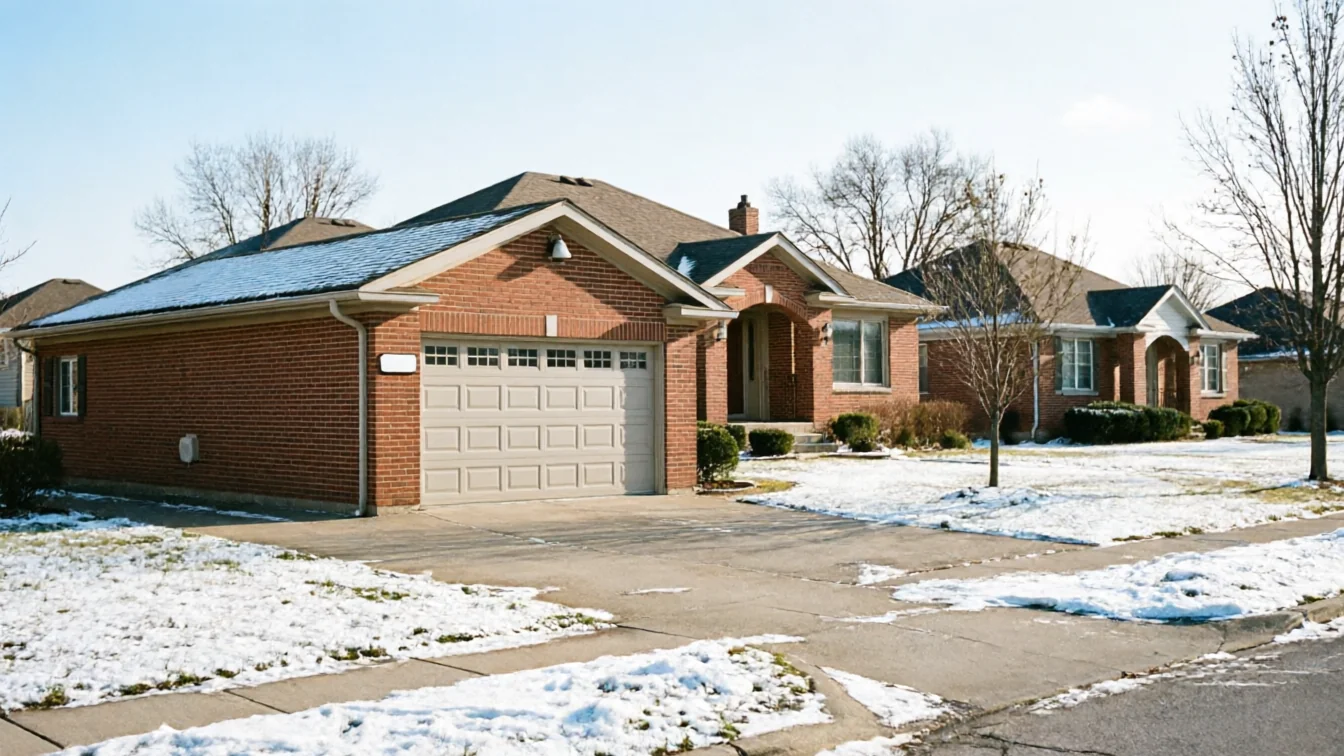
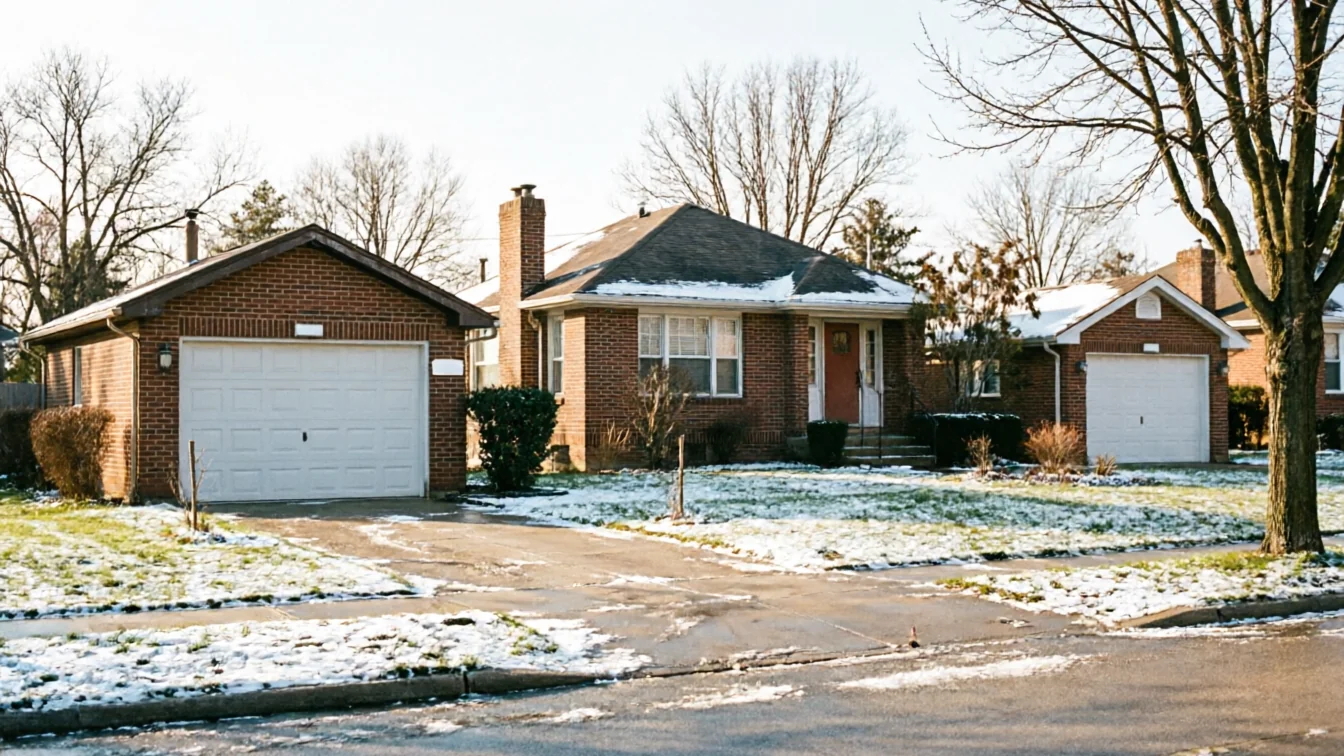
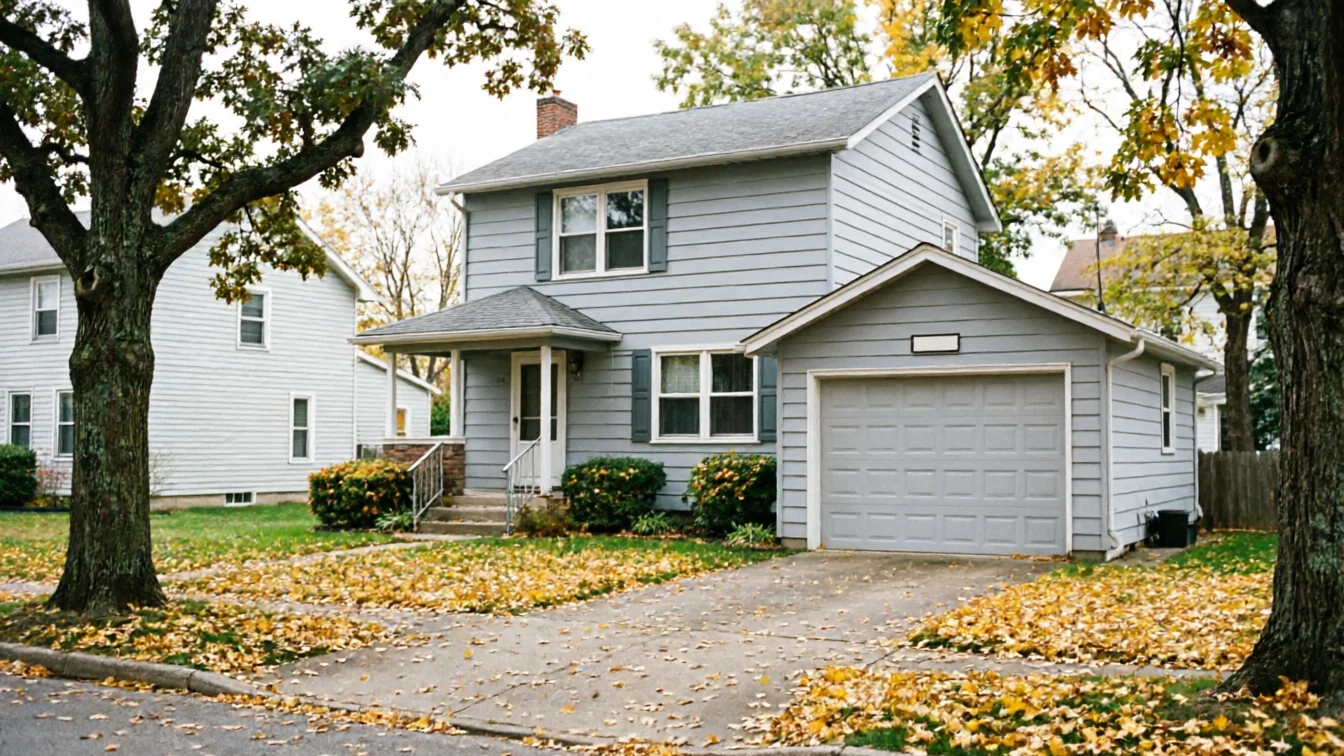
Most of Rochelle's housing went up in the early 1970s, which puts the typical garage door here at a size and build common to that decade: single-layer steel panels on a 16x7 two-car opening or a narrower 9x7 for the ranch and split-level lots, hung on either a worn extension spring pair or an early torsion setup bolted straight to the header. These doors weren't light to begin with, and forty-plus years of cycling has taken the temper out of the steel coil long before anyone notices. The first sign is almost always a door that won't lift past waist height, or one that slams the last foot on the way down because the spring stopped carrying its share of the weight. Some owners hear it first: a sharp crack from the garage, usually in the early morning when the steel is coldest and least forgiving. By the time the door won't move at all, the spring has usually already let go.
Our process
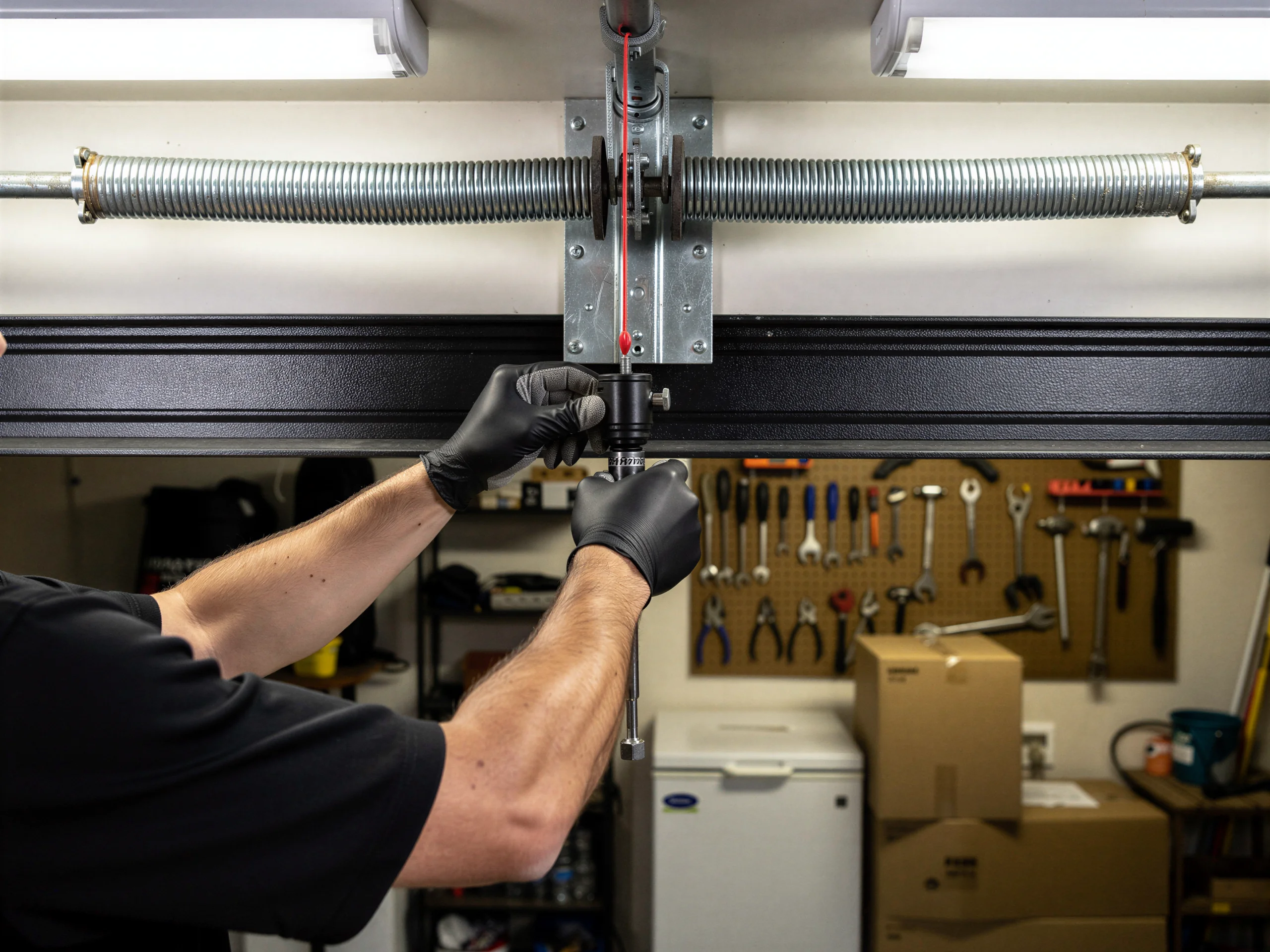
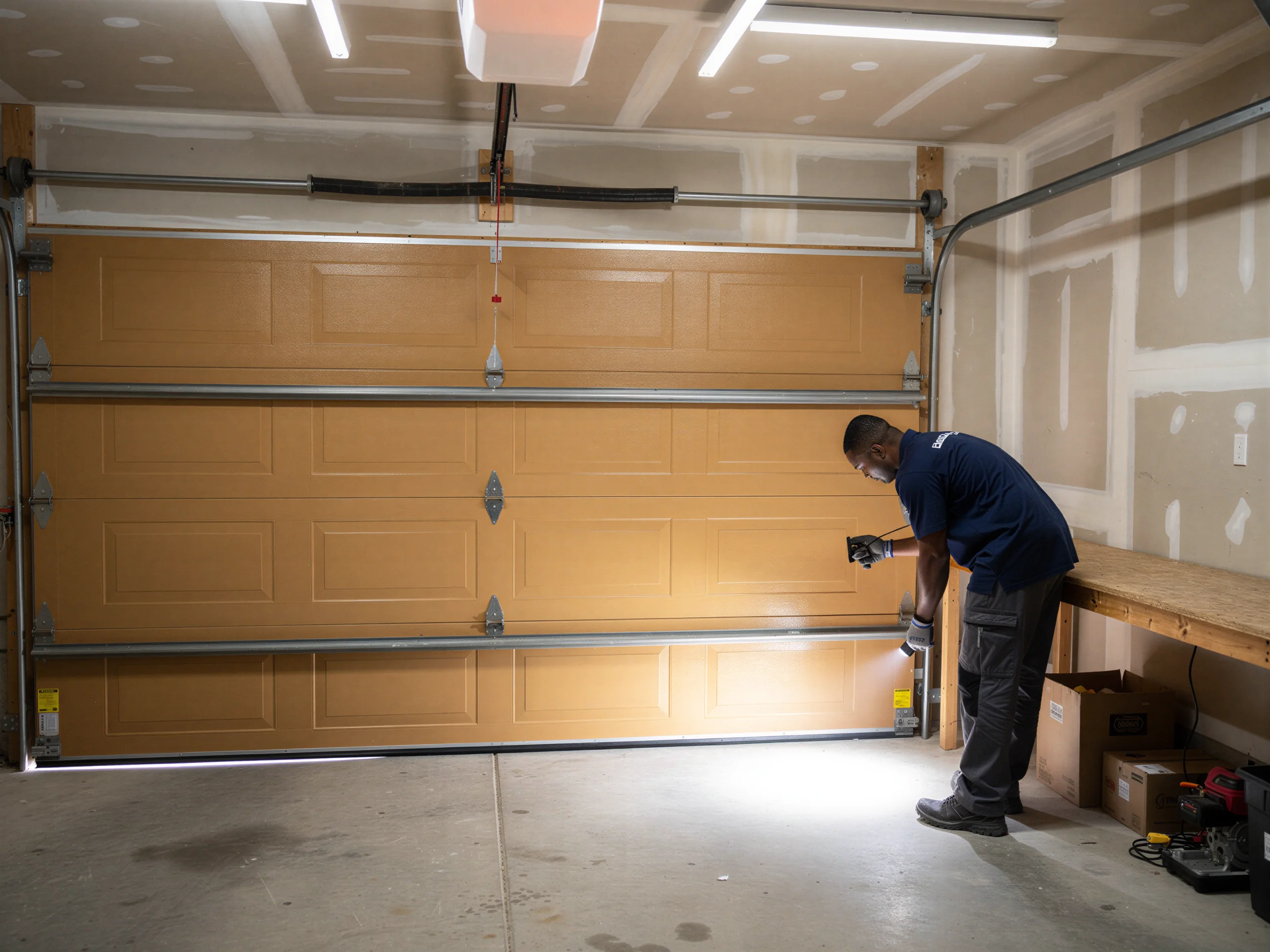
We match the spring to the door's actual weight and wind count rather than guessing off the old coil, since a lot of these original installs were undersized for the door even when new.
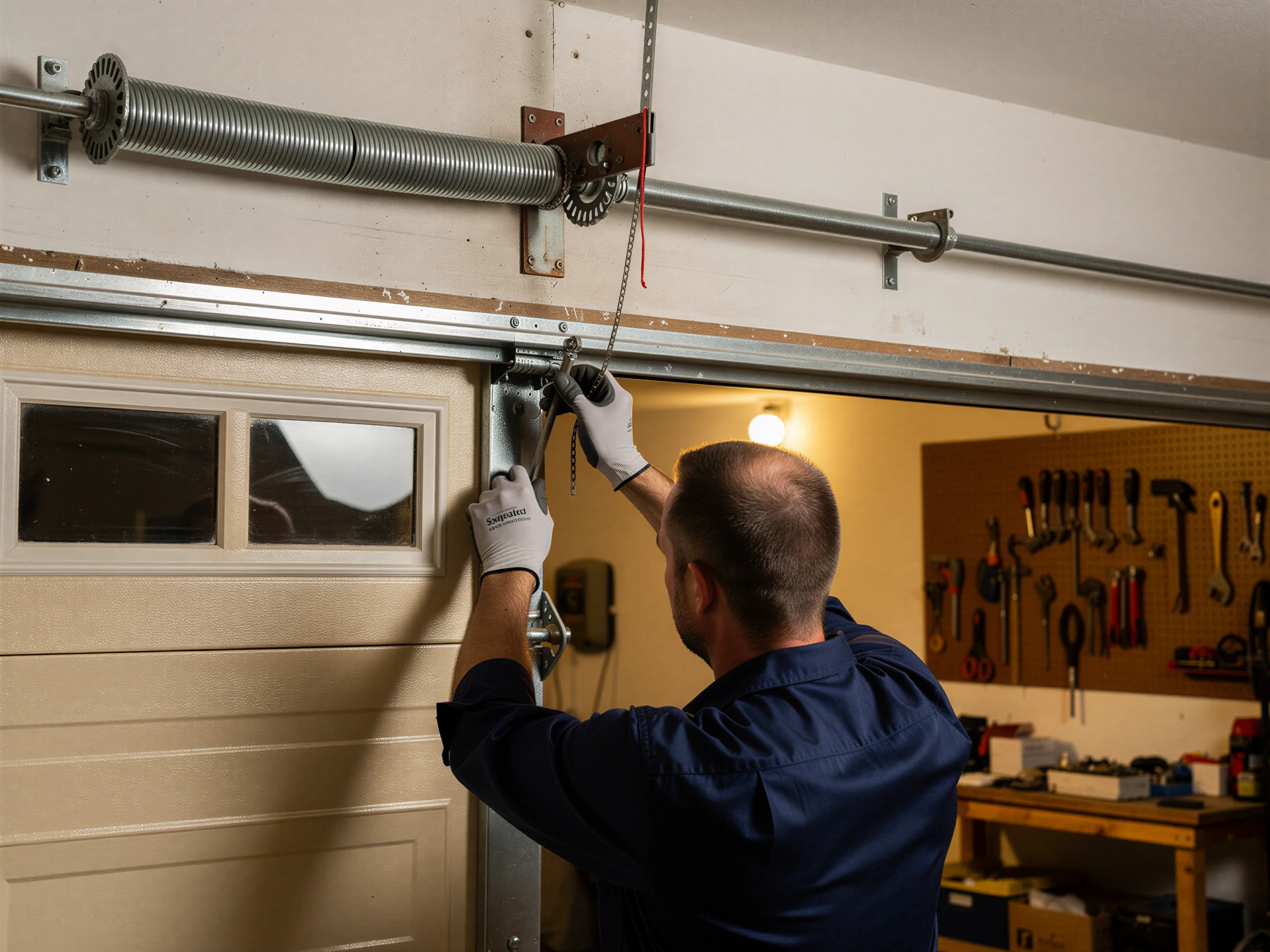
On the extension-spring jobs we also check the safety cables, which were optional hardware in the 1970s and often missing entirely - we won't close out a job without them installed, because a cable is what keeps a broken spring from becoming a projectile in a two-car garage.
Torsion conversions come up often enough on these houses that we carry the shaft hardware and drums needed to do one in a single visit rather than ordering parts and coming back.
Every repair gets the opener's force settings rechecked afterward, since a new spring changes how hard the motor has to work and an unadjusted opener will mask a spring problem instead of fixing it.
Booking
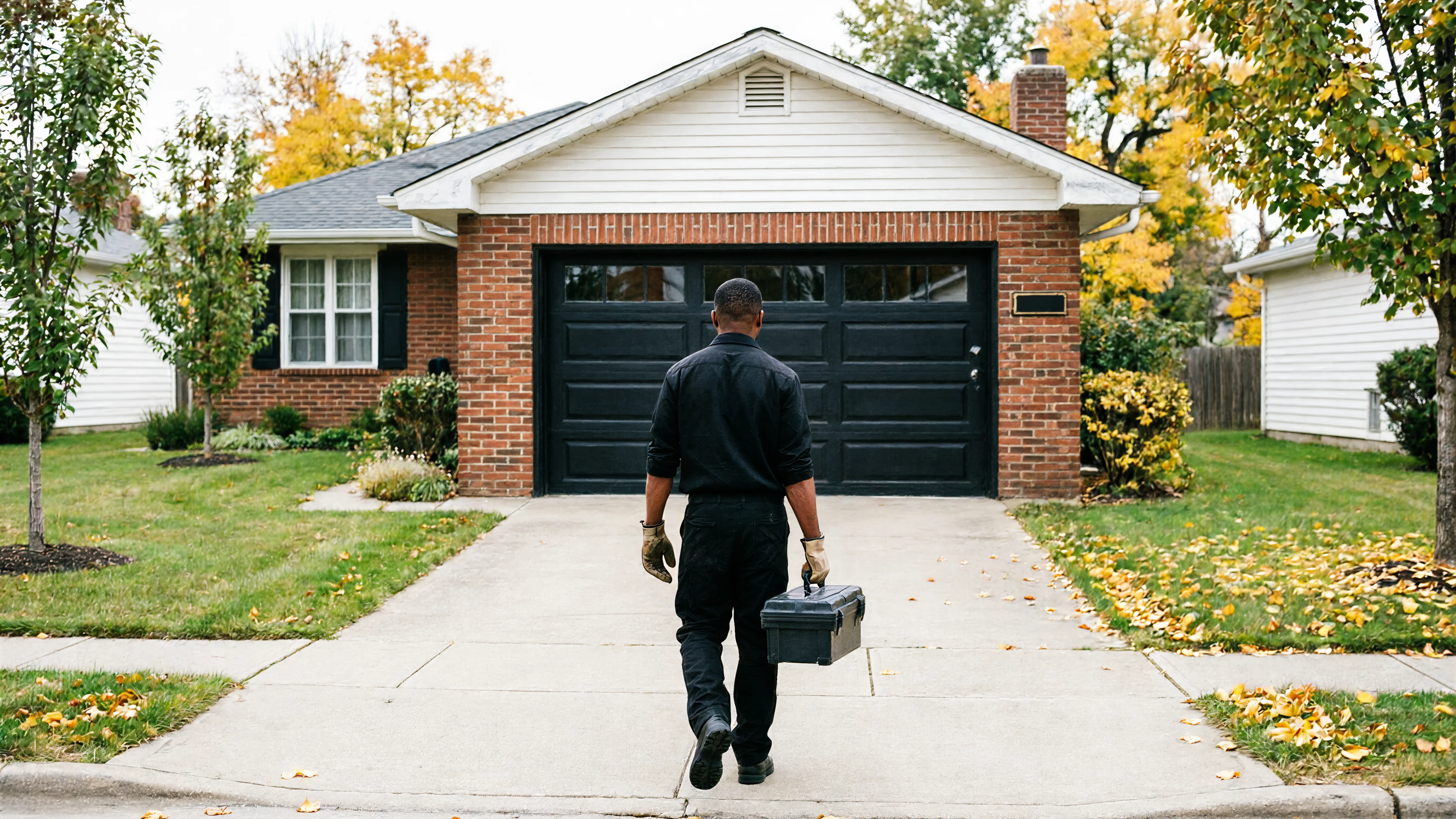
We run this job out of DeKalb, about 16 miles from Rochelle, so we schedule the trip rather than dispatch from a local yard. Tell us the door's rough age and whether it's one spring or two across the top - that's usually enough for us to bring the right gauge coil on the first trip instead of a second one. If you're not sure which type of spring you have, a photo of the top of the closed door, torsion bar or exposed coils, tells us before we ever load the truck.
Local causes
Illinois winters are hard on torsion and extension springs alike - steel contracts in the cold and loses a measurable amount of the flex it has in July, which means a spring already near the end of its cycle life is far more likely to snap in January than August.
Rochelle's housing stock, built mostly in that 1971 window, has had five decades of that seasonal swing working against springs that, in a lot of cases, were never upgraded from what the builder installed.
A 2,500-cycle spring rated for a milder climate and a lighter door just doesn't have the service life here that the same part would have somewhere with a shorter cold season.
Add that the median household income in Rochelle runs below the wider DeKalb service area, and we see more owners stretching a repair to its last possible mile instead of replacing a spring at the first sign of fatigue - which is understandable, but it's also why we see more full breaks than partial failures out this way.
Pricing
We don't have a flat number to post here that would hold up across every door and every spring type, and quoting one without seeing the setup would be a guess dressed up as a fact. What drives the cost on a 1971-era Rochelle door is usually whether it's a single spring or a pair, torsion or extension, and whether the drums, cables, or bearing plate need replacing alongside the spring itself - which is common on a door this age since those parts wear on the same schedule. We'll give you the actual number once we've seen the door and the spring size, not before.
On the truck
Because so much of Rochelle's garage stock dates to the same early-1970s build window, we keep extension spring pairs and the common 1970s torsion coil sizes on the truck, along with the safety cables that a lot of these original installs never had. What we don't stock is anything custom - a door that's been resized, a spring wound for a hardware combination outside the standard range, or odd bearing plates from a builder that didn't use a common brand. Those jobs need an order, and we'll tell you that up front rather than pretend otherwise.
Questions
Cold makes steel less flexible, and a spring that's already near the end of its rated cycles is far more likely to fail when it's contracted from low temperatures. A lot of Rochelle's doors date to the early 1970s, so the spring itself may be original or close to it, which means it's had decades of winters working against it before this one.
We stock the common extension and torsion spring sizes that match that era's doors, plus the safety cables that a lot of original 1970s installs were missing. If your door has custom hardware or a nonstandard size, we'll need to order that piece rather than carry it on the truck.
If one spring broke from age, the other is usually close behind on cycle life, so replacing both at once often costs less overall than paying for a second service call in a few months. We'll look at the wear on the second spring when we're there and give you a straight answer rather than upselling it automatically.
No - we cover Rochelle from our DeKalb location, about 16 miles out. We schedule the trip once we know the door type and spring setup so we can bring the right parts on the first visit.
Explore more
Ready when you are
DeKalb Garage Door Pros repairs and installs garage doors, springs and openers in DeKalb, IL and the surrounding area.