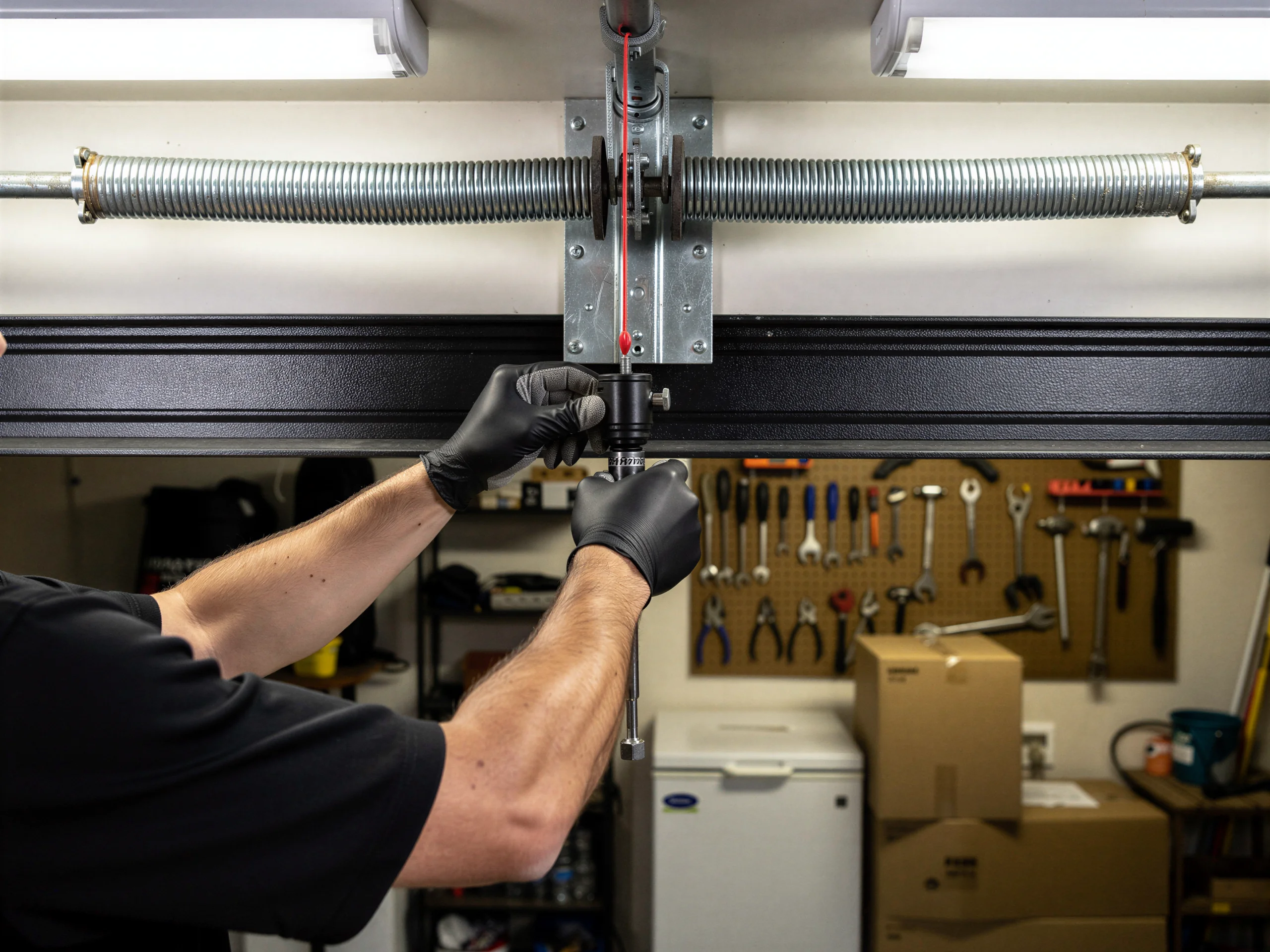
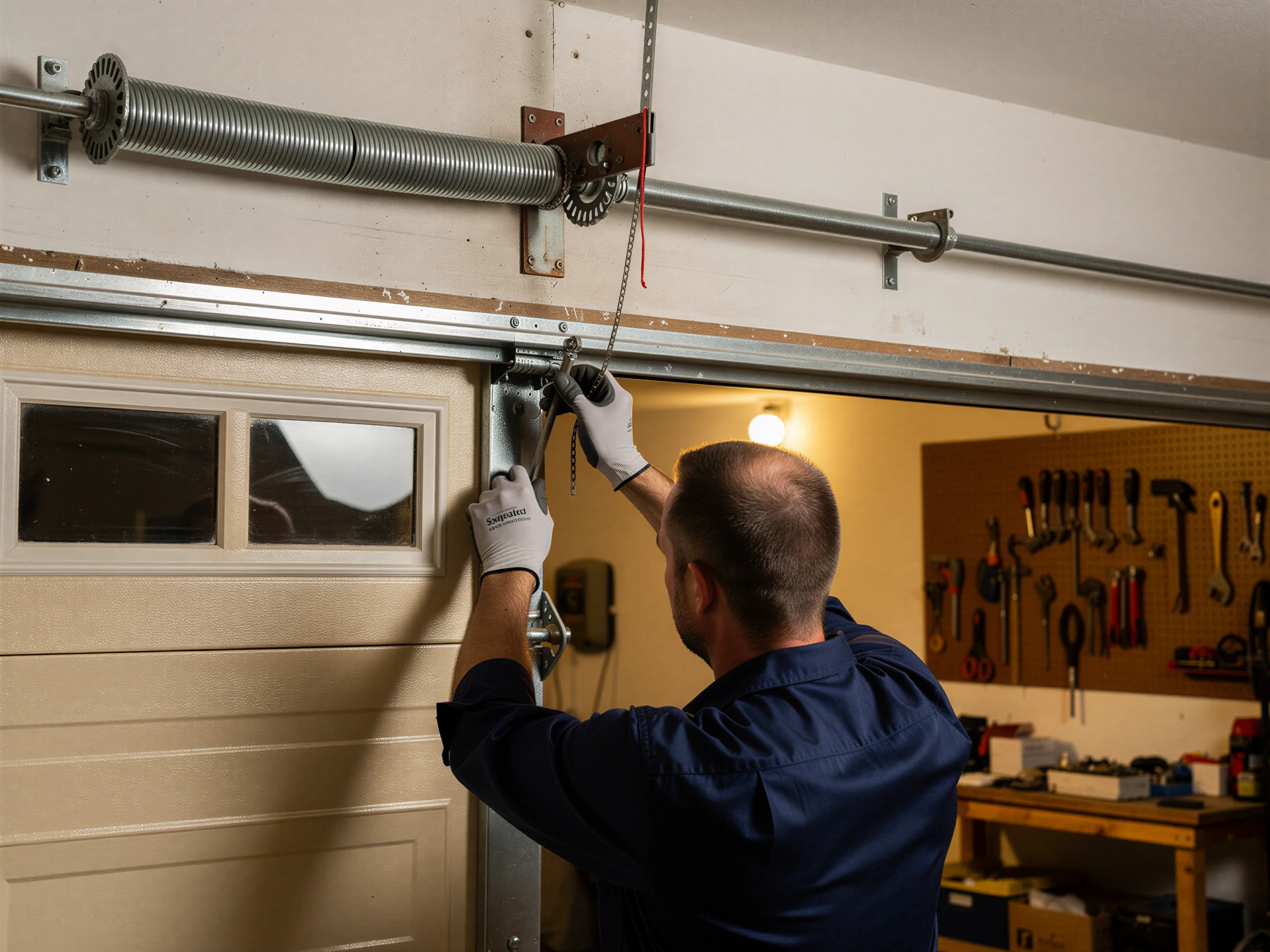
Spring failure isn't random here - it tracks the age of the housing. With median construction around 1976 across the service area, a large share of doors are still running on original or first-replacement torsion hardware that was never upgraded when the opener was added later. Older torsion setups, especially single-spring systems on heavier two-car doors, carry more load per coil than the dual-spring setups common in newer builds, so they fatigue sooner.
The cold makes it worse. In a severe cold climate band, steel springs lose tensile give in winter, and a coil that's already near its cycle limit is far more likely to snap on a 10-degree morning than a mild one. That's a mechanical fact about the metal, not a sales pitch - it's why so many of our calls cluster in January and February rather than evenly through the year.
With roughly 21,309 owner-occupied houses across this service area, most built in that same mid-century-to-2000s window, spring wear is a function of the housing stock's age and the winters it sits through, not bad luck. A correctly sized, correctly cycle-rated spring matched to your door's actual weight is the fix that holds up against both.